
Co-Living Evictions in Georgia: The Complete Operator Playbook
Terminations, notices, dispossessory filings, and writs of possession — the whole co-living eviction workflow in one place, with realistic timelines and flat-fee pricing.
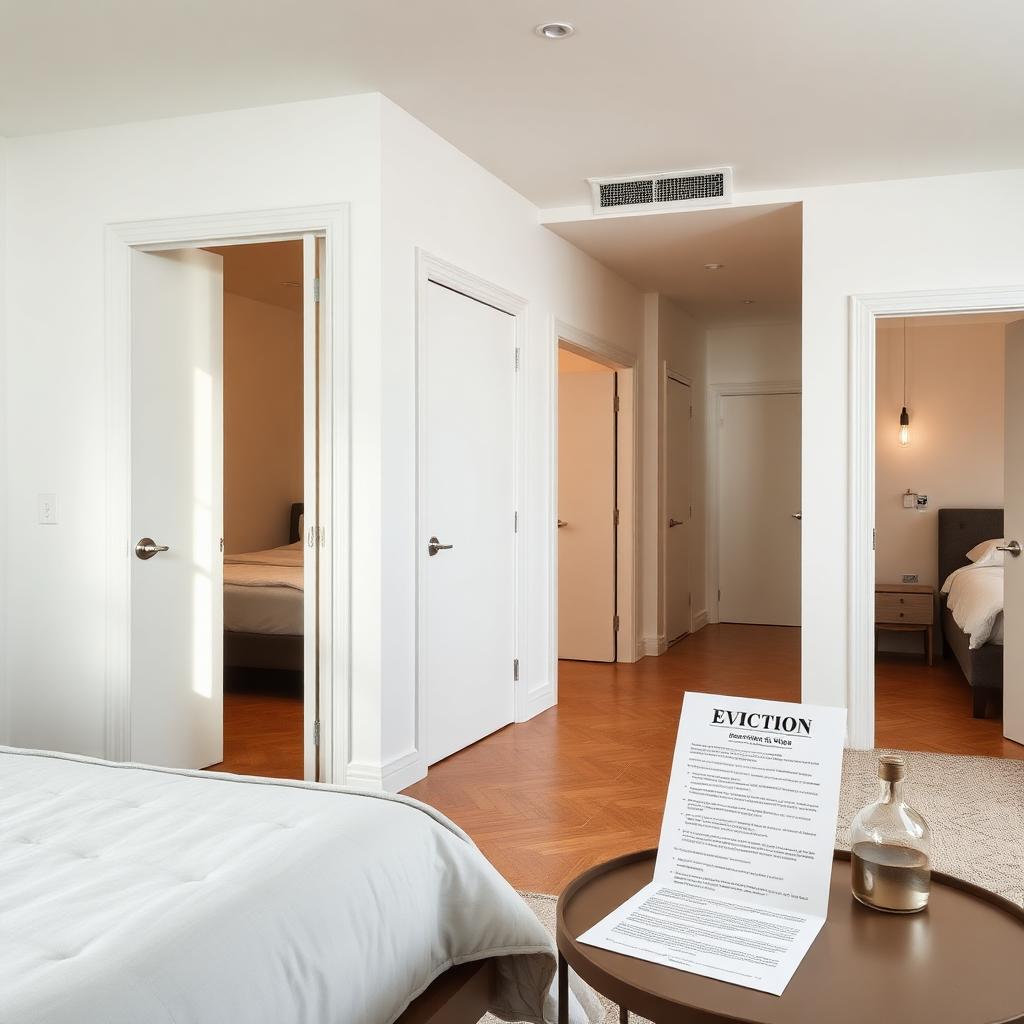
Co-living evictions look simple on paper — one tenant, one room — but in practice every misstep echoes through the rest of the house. A delayed notice keeps a bad actor in a shared kitchen for another two weeks. A sloppy ledger gets a case dismissed and reset to zero. This playbook is the version we wish every Georgia co-living operator had on day one.
Step 1 — Decide whether to terminate
Most co-living agreements (PadSplit, room rentals, shared-housing leases) let you terminate for unpaid rent, repeated house-rule violations, or behavior that threatens other residents. Before you act, make sure the ledger backs up the reason: dated balance, late fees applied per the agreement, and any written warnings stored where you can hand them to an attorney in 60 seconds.
Step 2 — Post the 3-day notice
Georgia requires a demand for possession before a dispossessory can be filed. For co-living rooms the cleanest approach is a 3-day notice posted on the room door with a witnessed photo and timestamped proof of service. Skipping this step is the single most common reason co-living cases get tossed.
See our walkthrough: How to post a 3-day notice in Georgia (with example).
Step 3 — File the dispossessory
Once the 3-day notice has expired without payment or cure, file the dispossessory in the magistrate or housing court for the county where the property sits. Your filing packet should include the signed agreement, current ledger, the posted notice with proof of service, and (for behavior-based cases) the violation history.
Step 4 — Court hearing and writ of possession
Most uncontested Georgia evictions are heard 2–4 weeks after filing. If the judge grants possession and the resident still won't leave, you'll request a writ of possession and schedule a set-out with a county-approved labor crew.
Co-living set-outs are usually faster (and cheaper) than full-house evictions because there's only one room to clear. Plan on a 2-person crew for a furnished room, 3+ if storage is heavy.
Where Reliable Property Experts fits in
We don't file evictions. We handle the set-out labor — the crew that clears the room once the writ of possession is issued and the sheriff schedules the set-out. Need a filer? Email support@reliablepropertyexperts.com and we'll refer you to Georgia partners who do.