
The Georgia Writ of Possession Process: Timeline, Sheriff Set-Out, and Off-Duty Deputy Scheduling
Understand your county's scheduling process, avoid paperwork delays, and learn when authorized off-duty deputies can offer an alternative to a backlogged writ calendar. The option has legal conditions; it is not an automatic shortcut.
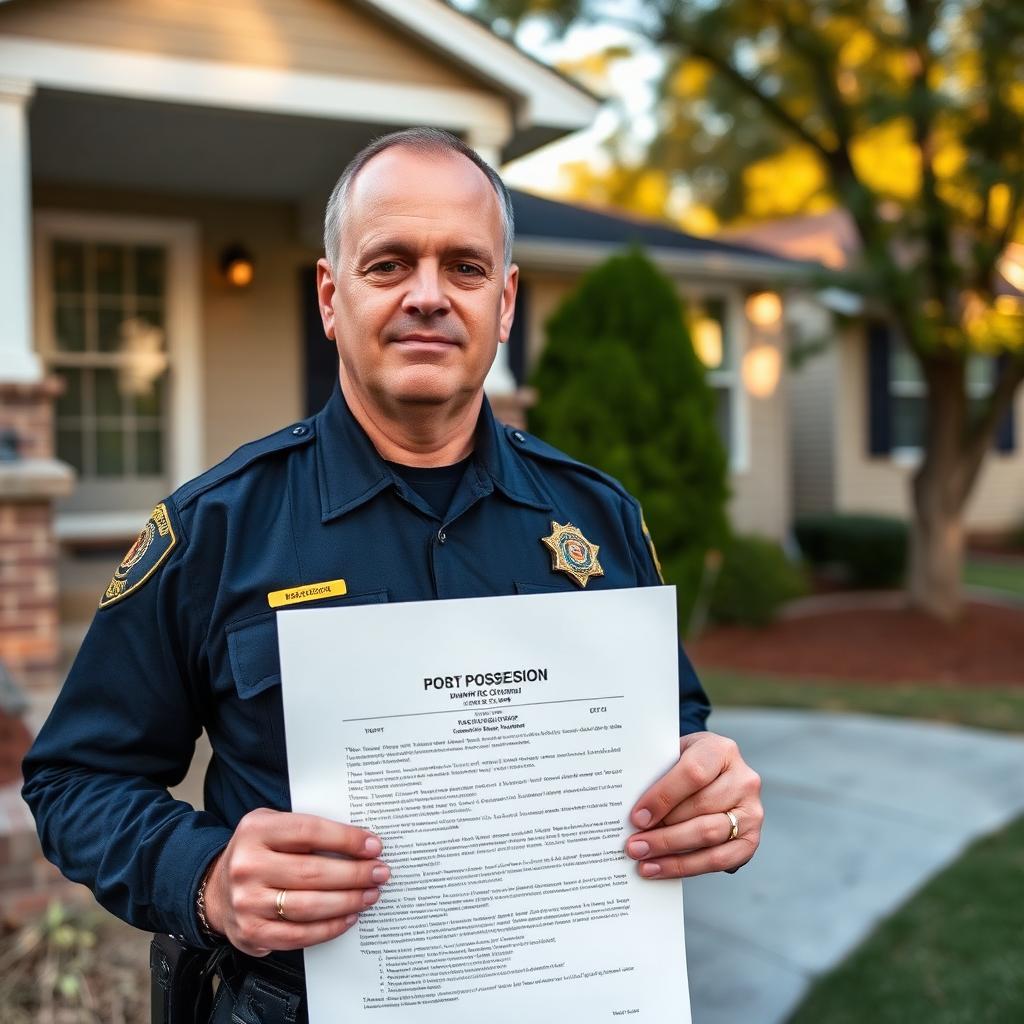
A Georgia landlord doesn't fully regain a rental until the writ of possession is executed and the property is physically restored. The writ is the court order that authorizes the sheriff or marshal to remove the tenant — but the timing, cost, and logistics can vary widely by county. A judgment alone is not permission to change locks or remove belongings. First confirm that the writ is effective, no stay prevents execution, and the responsible officer has approved the appointment. This guide covers the county handoff and the conditional off-duty officer option.
What the writ of possession actually is
A writ of possession is the final order in a Georgia dispossessory case, issued by the magistrate court under OCGA § 44-7-55. It directs the county sheriff or city marshal to remove the tenant from the premises and restore possession to the landlord. The writ does two things:
- Generally becomes effective seven days after judgment, subject to appeal provisions.
- Authorizes the responsible officer to restore possession when execution is legally permitted.
The writ is a court order — but not a labor crew. The sheriff will keep the peace and confirm the landlord is lawfully retaking the property. The physical work of moving the tenant's belongings is on the landlord. Follow the executing officer's placement instructions rather than assuming every property has a suitable curb or right-of-way.
How the writ gets issued: the Georgia dispossessory process
- Complete the required demand and notice. For nonpayment cases, review the OCGA § 44-7-50. three-business-day notice requirement and confirm proper delivery before filing.
- File the dispossessory affidavit in the magistrate court of the county where the property sits. Pay court costs at filing.
- Sheriff or marshal serves the tenant. The tenant has 7 days to file a written answer.
- No answer → default writ. Request a default writ of possession from the clerk.
- Answer filed → hearing set. The court provides the hearing date; its calendar varies.
- Judgment for landlord → confirm the writ's effective date. Review the seven-day rule, any appeal or stay, and the actual court order before requesting execution.
- Sheriff-supervised set-out. Deputy meets the labor crew on site; crew removes belongings; landlord takes the keys.
Georgia writ timeline: legal timing versus scheduling
These are separate milestones, not a promised total turnaround. Default cases, specific orders, appeals, and stays may change what happens next. Ask for the current queue and keep a record of the date your execution request was received.
The Georgia law on off-duty officer scheduling for writs
O.C.G.A. § 44-7-55(e), added through Georgia HB 1203, provides an alternative when the regular officer cannot execute the writ within 14 days of the landlord's request. An eligible off-duty sheriff, deputy, constable, marshal, or other POST-certified officer must have authority in the jurisdiction where the property is located. The landlord pays the officer; the local sheriff or marshal retains administrative authority over execution.
In practice, this looks like:
- Confirm eligibility with the enforcement office. Document the execution request and ask whether the 14-day condition applies to your writ. A long estimated backlog alone is not authorization.
- Use the county's required paperwork and an eligible officer. Confirm officer qualifications, jurisdiction, payment arrangements, and how execution is reported back to the office.
- Meet the written-notice requirements. The statute requires notice of the planned date and time at least five calendar days before execution. Confirm required recipients and delivery with the responsible office or your attorney, then coordinate the labor crew with the approved appointment.
Fulton and Gwinnett publish off-duty execution forms. Fulton's form includes a waiver of future execution by the Marshal's office for that writ, so read it carefully before choosing this route. Do not hire an officer independently and assume the appointment is valid, or use the option to bypass an appeal, stay, or later execution date ordered by the court.
An eligible off-duty appointment may reduce waiting if an officer is available sooner. Compare the office's actual appointment with the proposed alternative, officer cost, notice period, and crew availability before committing. No execution date is guaranteed by the statute.
County-level sheriff and marshal scheduling
Use the county where the property is located, not the owner's mailing address. Keep the case number, certified writ, full premises address, unit number, and an on-site contact ready when requesting execution.
- Fulton County — Marshal's Department
- The Marshal schedules evictions in order of receipt and contacts landlords to arrange the appointment. The court instructs landlords to request execution within 30 days of service of the writ. Its application checklist requires tenant names and the property address to match the warrant. Confirm receipt, the scheduling contact, and any off-duty application before booking labor.
- DeKalb County — State Court Marshal
- State and Magistrate Court civil papers are handled by the Marshal, not the Sheriff's Superior Court civil-paper process. DeKalb's court instructions direct landlords to contact the Marshal after the writ is signed to schedule eviction. Confirm that the signed writ reached the correct office.
- Gwinnett County — Sheriff's Civil Processing Office
- Bring a certified writ to Civil Processing within 30 days of issuance. Residential evictions are scheduled as received; the Sheriff warns that an unscheduled writ may be returned to the clerk. Confirm submission, local paperwork, and the approved appointment rather than assuming the court filing automatically placed you on the execution calendar.
- Cobb County — confirm current civil-process intake
- Ask the Sheriff's civil-process office to confirm the correct intake route for your issuing court, required writ copies and fees, crew requirements, and current appointment availability. Do not apply Fulton's or Gwinnett's deadlines or off-duty forms to a Cobb case without confirmation.
- Clayton County — check the order before scheduling
- Clayton's writ application accommodates court orders specifying a later execution date. Check that date first, then confirm current intake and scheduling requirements with the Sheriff's civil-process office. A generic seven-day calculation must not override the signed order.
County procedures can change. The sources below describe paperwork and handoffs, not live queue lengths or guaranteed appointment dates.
Common filing and scheduling errors to avoid
- Names or addresses that do not match. Compare the warrant, judgment, writ, and execution application. Include the unit number and verify county boundaries. Ask the clerk how to correct a discrepancy; do not change a signed court document yourself.
- Missing the required pre-filing notice. For a nonpayment case, confirm the applicable three-business-day notice and delivery requirements. Keep proof rather than relying on a generic notice intended for a different type of case.
- Confusing a judgment with an execution appointment. Check whether a writ must be requested, certified, and delivered separately, and obtain confirmation that enforcement received it.
- Sending papers to the wrong office or missing a local deadline. DeKalb's court distinction matters. Fulton's 30-day instruction runs from service of the writ; Gwinnett's runs from issuance. Verify the current rule for your case instead of treating these as one statewide deadline.
- Overlooking an appeal, stay, or later court-ordered date. Review the court docket and consult counsel about any appeal, registry payments, bankruptcy notice, or other stay before execution. Never assume that payment or an appeal automatically resolves the possession issue.
- Arranging off-duty execution without meeting the conditions. Confirm the 14-day request condition, officer jurisdiction, local administration, and five-calendar-day written notice. An available officer is not a substitute for legal authorization.
- Arriving without enough labor or access equipment. Give the officer an accurate property and belongings assessment. Confirm crew size, access arrangements, and the meeting time; inadequate preparation can require rescheduling.
What happens on set-out day
- Sheriff / marshal: arrives at the scheduled time, knocks, supervises, confirms possession is restored.
- Set-out labor crew: moves belongings as directed by the executing officer, with placement and access arrangements confirmed in advance.
- Coordinator (Reliable Property Experts): books the crew to match the sheriff's window, brings dollies and tools, photo-documents the unit, hands the landlord the keys.
- Locksmith (optional): rekeys the property the moment the set-out is complete.
If the crew is short-handed or arrives late, the deputy can — and often will — reschedule the writ, pushing possession back days or weeks.
Need a set-out crew for your Georgia writ?
Crew planning for your confirmed execution appointment
Tell us the county, property type, belongings volume, and the officer's confirmed appointment. We'll help plan crew size and access. Officer authorization and execution scheduling remain with the responsible enforcement office; reserving a crew does not authorize an eviction.
Frequently asked questions
What is a writ of possession in Georgia?
A writ of possession is a court order restoring possession of a rental to the landlord after a dispossessory case. Under O.C.G.A. § 44-7-55, it generally becomes effective seven days after judgment, subject to appeal provisions. Default cases and specific court orders must be checked separately.
How long does a Georgia writ take to execute?
There is no single statewide execution date. After the writ becomes effective, scheduling depends on the responsible sheriff or marshal, receipt of the required paperwork, crew availability, and any appeal or stay. Confirm the actual appointment with the enforcement office rather than relying on an estimated county backlog.
Can off-duty deputies help bypass a Georgia writ backlog?
O.C.G.A. § 44-7-55(e) provides a conditional option when the regular officer cannot execute within 14 days of the landlord's request. The landlord pays an eligible officer with authority in the property's jurisdiction, follows the local administrative process, and satisfies written-notice requirements at least five calendar days before execution. This is not permission to bypass a stay or guarantee an earlier date.
Who moves the tenant's belongings on set-out day?
The authorized officer executes the writ and supervises the set-out; the landlord arranges sufficient labor and equipment. Confirm where belongings must be placed with the executing officer and follow applicable access, safety, and local requirements.
Which filing errors commonly delay execution?
Mismatched tenant names or property addresses, a missing unit number, sending papers to the wrong county or enforcement office, missing certified paperwork or local deadlines, and overlooking an appeal, stay, or court-ordered execution date can delay the process. Check the court file and the county's current checklist before requesting execution.
Official sources and county checklists
- Georgia HB 1203 — off-duty execution provisions in O.C.G.A. § 44-7-55(e)
- Fulton Magistrate Court — dispossessory and execution requests
- Fulton Clerk — dispossessory checklist
- Fulton Marshal — eviction scheduling
- Fulton — off-duty officer execution application
- DeKalb State Court — eviction procedures
- DeKalb Sheriff — civil-paper jurisdiction
- Gwinnett Sheriff — certified writ intake and scheduling
- Clayton County — writ of possession application
Related reading
- Georgia Eviction Process, Timeline & Fees
- How to Post a 3-Day Notice in Georgia
- Georgia Landlord–Tenant Handbook (Free PDF)
- Metro Atlanta Set-Out Labor Pricing
This article is general information about Georgia landlord-tenant procedure and is not legal advice. County-specific procedures — including off-duty deputy scheduling — should be confirmed with the civil division of the sheriff or marshal handling your writ.